

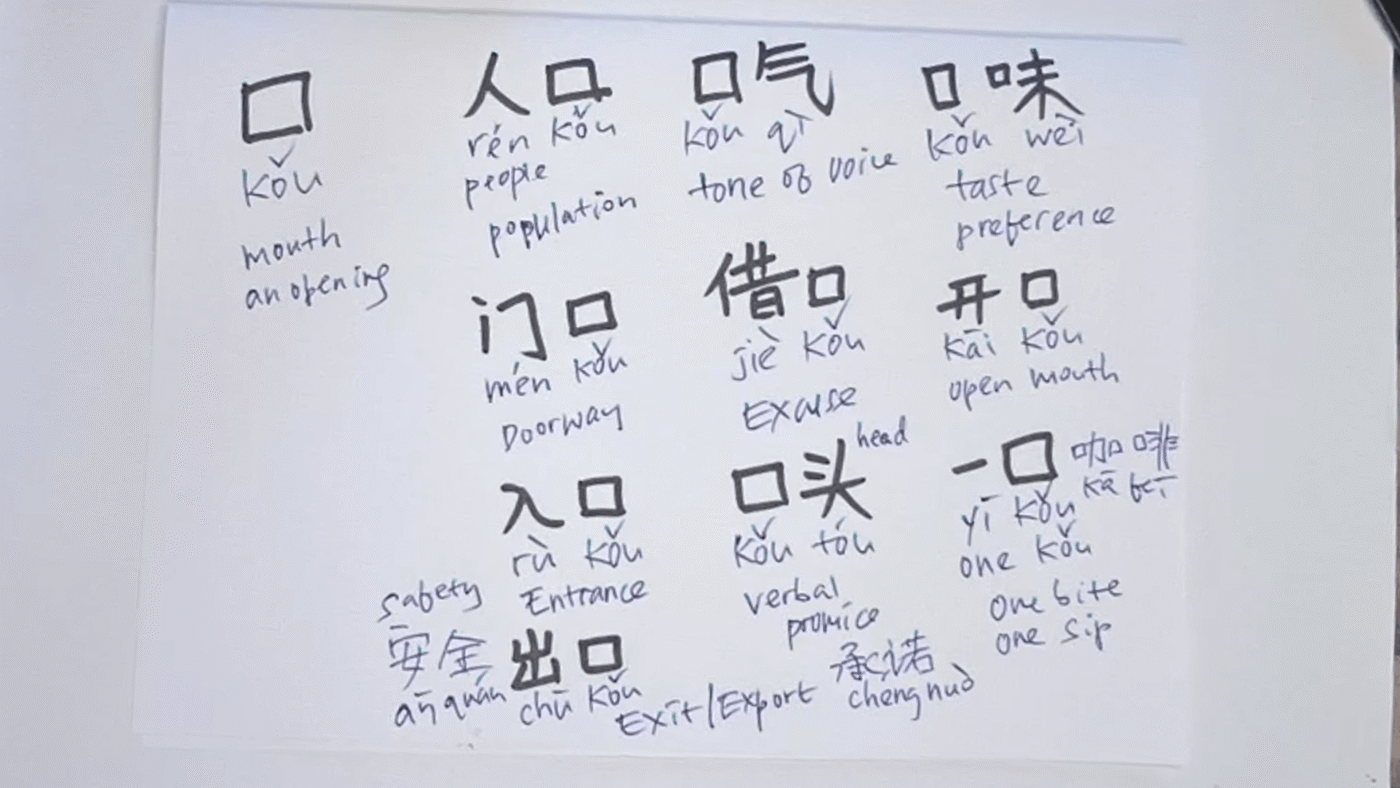
1. What does 口 (kǒu) mean by itself?
A) Nose
B) Mouth
C) Eye
D) Ear
2. What does 人口 (rén kǒu) mean?
A) Entrance
B) Exit
C) Population
D) Taste
3. Which sentence means “Let’s meet at the school entrance”?
A) 我们在学校门口见面吧。
Wǒmen zài xuéxiào ménkǒu jiànmiàn ba.
B) 我们在学校里面见面吧。
Wǒmen zài xuéxiào lǐmiàn jiànmiàn ba.
C) 我们在操场跑步吧。
Wǒmen zài cāochǎng pǎobù ba.
D) 我们去公园玩吧。
Wǒmen qù gōngyuán wán ba.
4. What does 出口 (chū kǒu) mean?
A) Door
B) Window
C) Exit
D) Floor
5. What does 入口 (rù kǒu) mean?
A) Exit
B) Entrance
C) Roof
D) Garden
6. Which phrase means “tone of voice”?
A) 借口 (jièkǒu)
B) 口气 (kǒu qì)
C) 口味 (kǒu wèi)
D) 开口 (kāi kǒu)
7. What does 借口 (jièkǒu) mean?
A) Promise
B) Excuse
C) Agreement
D) Question
8. What does 口头 (kǒutóu) mean?
A) Written
B) Verbal
C) Funny
D) Serious
9. What does 口味 (kǒu wèi) mean?
A) Voice
B) Food preference / taste
C) One bite
D) Mouth
10. What does 一口 (yī kǒu) mean?
A) One book
B) One cup
C) One mouth
D) One sip or one bite
1. What does 口 (kǒu) mean by itself?
🔹 Correct Answer: B) 口 (kǒu) – Mouth
📘 Explanation:
- 口 (kǒu) means mouth .
- It’s used in many phrases related to speaking, eating, or sound.
📘 Options with pinyin:
- A) 鼻子 (bízi ) – nose
- B) 口 (kǒu ) – mouth ✅
- C) 眼睛 (yǎnjīng ) – eye
- D) 耳朵 (ěrduo ) – ear
2. What does 人口 (rén kǒu) mean?
🔹 Correct Answer: C) 人口 (rén kǒu) – Population
📘 Explanation:
- 人 (rén) = person/people
- 口 (kǒu) = mouth
- Together, 人口 (rén kǒu) literally means “mouths” but refers to population
📘 Options with pinyin:
- A) 入口 (rùkǒu ) – entrance
- B) 出口 (chūkǒu ) – exit
- C) 人口 (rén kǒu ) – population ✅
- D) 味道 (wèidào ) – taste
3. Which sentence means “Let’s meet at the school entrance”?
🔹 Correct Answer: A) 我们在学校门口见面吧。
Wǒmen zài xuéxiào ménkǒu jiànmiàn ba.
📘 Explanation:
- 我们 (wǒmen) – we
- 在 (zài) – at
- 学校 (xuéxiào) – school
- 门口 (ménkǒu) – doorway / entrance
- 见面 (jiànmiàn) – meet
- 吧 (ba) – let’s
✔️ Full meaning: “Let’s meet at the school entrance.”
📘 Options with pinyin:
- A) 我们在学校门口见面吧。Wǒmen zài xuéxiào ménkǒu jiànmiàn ba. ✅
- B) 我们在学校里面见面吧。Wǒmen zài xuéxiào lǐmiàn jiànmiàn ba. – Let’s meet inside the school
- C) 我们在操场跑步吧。Wǒmen zài cāochǎng pǎobù ba. – Let’s run on the playground
- D) 我们去公园玩吧。Wǒmen qù gōngyuán wán ba. – Let’s go to the park to play
4. What does 出口 (chū kǒu) mean?
🔹 Correct Answer: C) 出口 (chū kǒu) – Exit
📘 Explanation:
- 出 (chū) = out
- 口 (kǒu) = opening
- Together, they form exit , often seen on signs.
📘 Options with pinyin:
- A) 门 (mén ) – door
- B) 窗户 (chuānghù ) – window
- C) 出口 (chūkǒu ) – exit ✅
- D) 地板 (dìbǎn ) – floor
5. What does 入口 (rù kǒu) mean?
🔹 Correct Answer: B) 入口 (rù kǒu) – Entrance
📘 Explanation:
- 入 (rù) = enter
- 口 (kǒu) = opening
- So 入口 (rù kǒu) means entrance .
📘 Options with pinyin:
- A) 出口 (chūkǒu ) – exit
- B) 入口 (rùkǒu ) – entrance ✅
- C) 屋顶 (wūdǐng ) – roof
- D) 花园 (huāyuán ) – garden
6. Which phrase means “tone of voice”?
🔹 Correct Answer: B) 口气 (kǒu qì) – Tone of voice
📘 Explanation:
- 口气 (kǒu qì) literally means “mouth + breath,” and is used to describe someone’s tone of voice — whether polite, rude, etc.
📘 Options with pinyin:
- A) 借口 (jièkǒu ) – excuse
- B) 口气 (kǒu qì ) – tone of voice ✅
- C) 口味 (kǒuwèi ) – taste
- D) 开口 (kāikǒu ) – to speak up
7. What does 借口 (jièkǒu) mean?
🔹 Correct Answer: B) 借口 (jièkǒu) – Excuse
📘 Explanation:
- 借 (jiè) = borrow / make up
- 口 (kǒu) = mouth
- Together, 借口 (jièkǒu) means excuse — something you say to justify not doing something.
📘 Options with pinyin:
- A) 承诺 (chéngnuò ) – promise
- B) 借口 (jièkǒu ) – excuse ✅
- C) 协议 (xiéyì ) – agreement
- D) 问题 (wèntí ) – question
8. What does 口头 (kǒutóu) mean?
🔹 Correct Answer: B) 口头 (kǒutóu) – Verbal
📘 Explanation:
- 口头 (kǒutóu) means verbal or oral , such as a verbal promise.
📘 Options with pinyin:
- A) 书面 (shūmiàn ) – written
- B) 口头 (kǒutóu ) – verbal ✅
- C) 有趣 (yǒuqù ) – funny
- D) 严肃 (yán sù ) – serious
9. What does 口味 (kǒu wèi) mean?
🔹 Correct Answer: B) 口味 (kǒu wèi) – Food preference / Taste
📘 Explanation:
- 口味 (kǒu wèi) means what kind of food/drink you like — your taste preference .
📘 Options with pinyin:
- A) 语气 (yǔqì ) – tone of voice
- B) 口味 (kǒuwèi ) – taste ✅
- C) 一口 (yī kǒu ) – one bite/sip
- D) 嘴巴 (zuǐba ) – mouth
10. What does 一口 (yī kǒu) mean?
🔹 Correct Answer: D) 一口 (yī kǒu) – One sip or one bite
📘 Explanation:
- 一 (yī) = one
- 口 (kǒu) = mouth/opening
- Together, 一口 (yī kǒu) is a measure word for taking a small amount — like a bite or a sip .
📘 Options with pinyin:
- A) 一本书 (yī běn shū ) – one book
- B) 一杯水 (yī bēi shuǐ ) – one cup of water
- C) 一张嘴 (yī zhāng zuǐ ) – one mouth
- D) 一口 (yī kǒu ) – one bite or one sip ✅
Subscribe: Receive Daily Vocab Lesson in Your Mailbox.
Ready to effortlessly expand your vocabulary as a beginner? We'll send one new English, Chinese, and Japanese word or phrase straight to your inbox every single day.
Subscribe now and get ready to learn smarter, not harder!
Sign Up to Receive FREE BEGINNER LEVEL Daily Chinese & Japanese Vocab Lesson.
免费订阅初级英/日语词汇每日电子报。
無料!初級英語・中国語単語デイリーニュースレターに登録する